Key takeaways
- “Fire insurance adjuster” can mean three different people: a staff adjuster or independent adjuster (both working for the insurer), or a public adjuster (working for you).
- Fire claims usually include more than burned materials. Smoke, soot, firefighting water, contents, and living expenses all need separate documentation.
- Do not discard damaged items or begin major demolition until the damage is documented.
- Texas regulates public adjusters under Insurance Code Chapter 4102. Fees are capped at 10% of the settlement, and you have 72 hours to rescind a contract.
- Coverage and payment depend on your policy. No adjuster can honestly guarantee an outcome.
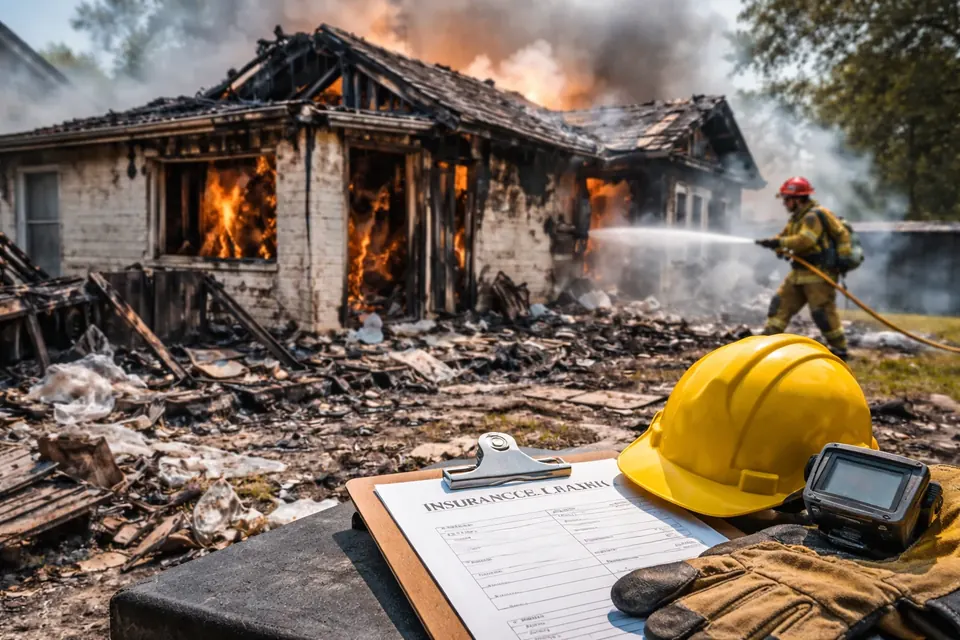
A fire can upend your life in minutes. Once the fire department leaves, you face debris, smoke odor, water-soaked rooms, and an insurance claim that will shape your recovery. The person at the center of that claim is the fire insurance adjuster. Most homeowners and business owners in McAllen do not know there is more than one kind of adjuster, or that they work for different people.
This guide explains what a fire insurance adjuster does, how the insurance company’s adjuster differs from a public adjuster, and what you can do to protect your fire claim no matter who is adjusting it.
What is a fire insurance adjuster?
A fire insurance adjuster investigates a fire loss, figures out what the policy covers, and calculates what it should cost to repair or replace the damaged property. In Texas, adjusters are licensed by the Texas Department of Insurance (TDI). Who hires the adjuster determines whose interests they represent.
| Adjuster type | Hired and paid by | Represents | Typical role on a fire claim |
|---|---|---|---|
| Staff (company) adjuster | Your insurance company | The insurer | Investigates, writes the insurer’s estimate, recommends payment |
| Independent adjuster | Your insurer, on contract | The insurer | Same as a staff adjuster; common after large losses or catastrophes |
| Public adjuster | You, the policyholder, by written contract | The insured only | Documents the loss, prepares the claim, presents and negotiates it with the insurer |
None of this means the insurer’s adjuster is acting in bad faith. Many are careful and fair. But their job is to evaluate the claim for the insurance company, often under its estimating guidelines and with a heavy caseload. A public adjuster’s only job is to present your side of the claim as completely as the facts and the policy allow. Texas public adjuster contracts must state “WE REPRESENT THE INSURED ONLY.”
What a fire insurance adjuster does on a claim
Inspect visible and hidden damage
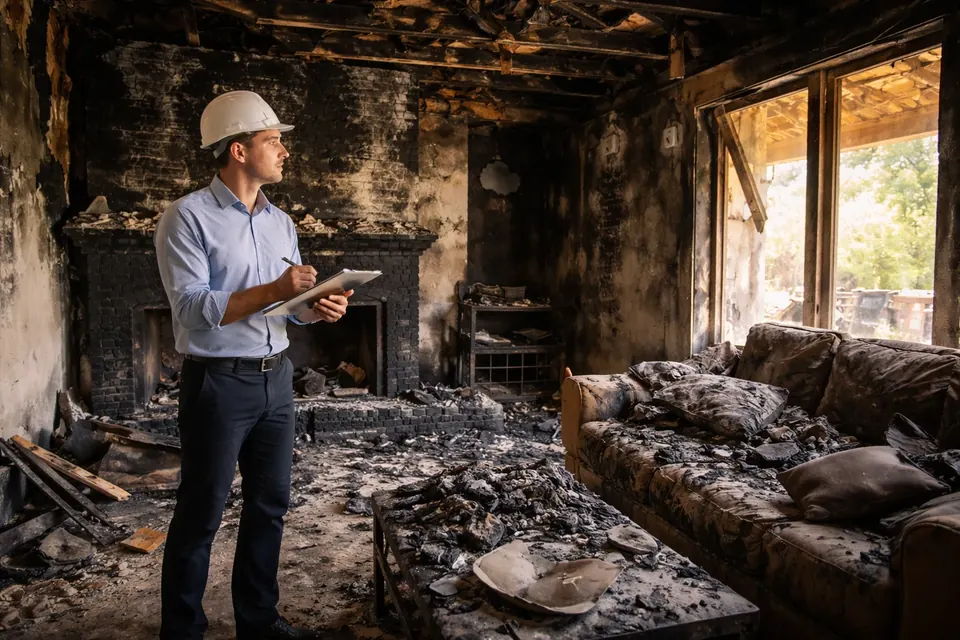
Flames are only part of a fire loss. Heat can warp framing, roof decking, windows, and plumbing. Smoke gets into wall cavities, attics, ductwork, and insulation. Water and chemicals from firefighting soak flooring, drywall, and cabinets. In the humid Rio Grande Valley (RGV) climate, wet materials can grow mold if they are not dried quickly. A careful inspection covers all of these areas, not just the room where the fire started.
Review the policy
Most homeowners policies split a fire loss into several coverages, and each has its own limits and rules:
- Dwelling (Coverage A) for the house itself.
- Other structures for detached garages, fences, and sheds.
- Personal property (contents), often subject to special limits on jewelry, firearms, cash, and collectibles.
- Loss of use / additional living expenses (ALE) while the home is uninhabitable.
- Ordinance or law for code-required upgrades, if included.
Commercial policies add business income and extra expense coverage. See our commercial property claims page if your business was affected.
Estimate repair and replacement costs
Insurers and public adjusters commonly use estimating software such as Xactimate to build line-item estimates. Differences often come from scope (what is included), quantities, and pricing, more than from the software itself. A line-item estimate lets you compare one side with the other.
Inventory contents
Contents claims are often the most time-consuming part of a fire loss. Every item needs a description, a quantity, an age, and a replacement cost. Under a replacement cost policy, the insurer may first pay actual cash value and then release depreciation once items are replaced. Our guide to replacement cost vs. actual cash value in Texas explains how that works.
Negotiate and resolve the claim
Once both sides have estimates, differences are worked out through re-inspections, supporting documentation, and negotiation. If the disagreement is about the amount of loss and not coverage, many policies include an appraisal clause. Learn more on our insurance appraisal page.
Insurer’s adjuster vs. public adjuster: a side-by-side look
| Question | Insurer’s adjuster | Public adjuster |
|---|---|---|
| Who is the client? | The insurance company | You, the policyholder |
| Who pays? | The insurer | You, under a written contract (capped at 10% of the settlement in Texas) |
| Writes an estimate? | Yes, the insurer’s estimate | Yes, an independent estimate of your loss |
| Prepares your contents inventory? | Usually reviews what you submit | Often helps build and price it |
| Can give legal advice? | No | No. Public adjusters are not attorneys. |
| Can do your repairs? | No | No. Texas conflict-of-interest rules under Chapter 4102 bar this. |
How to protect your fire claim, whoever adjusts it
These steps help on any fire claim, whether you hire help or not:
- Get safe and secure the property. Follow the fire department’s guidance on re-entry. Board up openings and tarp the roof to prevent more damage, and keep receipts. Reasonable mitigation is a policy duty.
- Report the claim promptly and write down your claim number, adjuster names, and every call.
- Request a certified copy of your policy, including endorsements and the declarations page.
- Photograph and video everything before cleanup: each room, ceilings, closets, the attic, the HVAC system, and the exterior.
- Do not discard damaged contents until they are documented. Keep samples of flooring, cabinets, or fabrics when practical.
- Keep receipts for hotels, meals above your normal costs, mileage, and emergency purchases for your ALE claim.
- Put requests and disagreements in writing, and ask the insurer to explain any denial or reduction in writing.
- Do not sign a release or final settlement until you understand what it covers and what you may be giving up.
Our claim documentation checklist turns these steps into a printable list, and the claim calculator can help you estimate how deductibles and depreciation affect a payment.
Fire damage that is easy to overlook
| Damage | Why it gets missed | What to ask for |
|---|---|---|
| Smoke and soot in unburned rooms | Looks “clean” at a glance; odor lingers | Cleaning or replacement scope for every affected room, plus odor control. See our smoke damage claims page. |
| HVAC and ductwork | Contamination is inside the system | Inspection and cleaning or replacement of ducts and components |
| Attic insulation and framing | Out of sight | Attic photos; replacement of smoke-saturated insulation |
| Water from firefighting | Treated as minor next to the fire | Drying, moisture readings, and removal of wet materials |
| Electrical wiring | Heat damage hidden in walls | Evaluation by a licensed electrician |
| Code-required items | Not part of “like kind and quality” | Review of ordinance or law coverage; McAllen adopted the 2024 ICC codes effective January 1, 2026 |
Texas claim timelines that apply to fire claims
Texas Insurance Code Chapter 542 sets timelines for most property claims. Insurers generally must acknowledge the claim, start the investigation, and request needed information within 15 days of notice. They then have 15 business days after receiving all requested items to accept or reject the claim, and they can extend that by up to 45 more days if they notify you. Once a claim is accepted, payment is generally due within 5 business days. Different timeframes apply to eligible surplus lines insurers. Many policies also contain contractual deadlines for filing suit, so read your policy and consult a Texas attorney about legal deadlines. If your claim has stalled, our delayed insurance claims page explains your options.
What to expect when the insurer’s fire adjuster visits
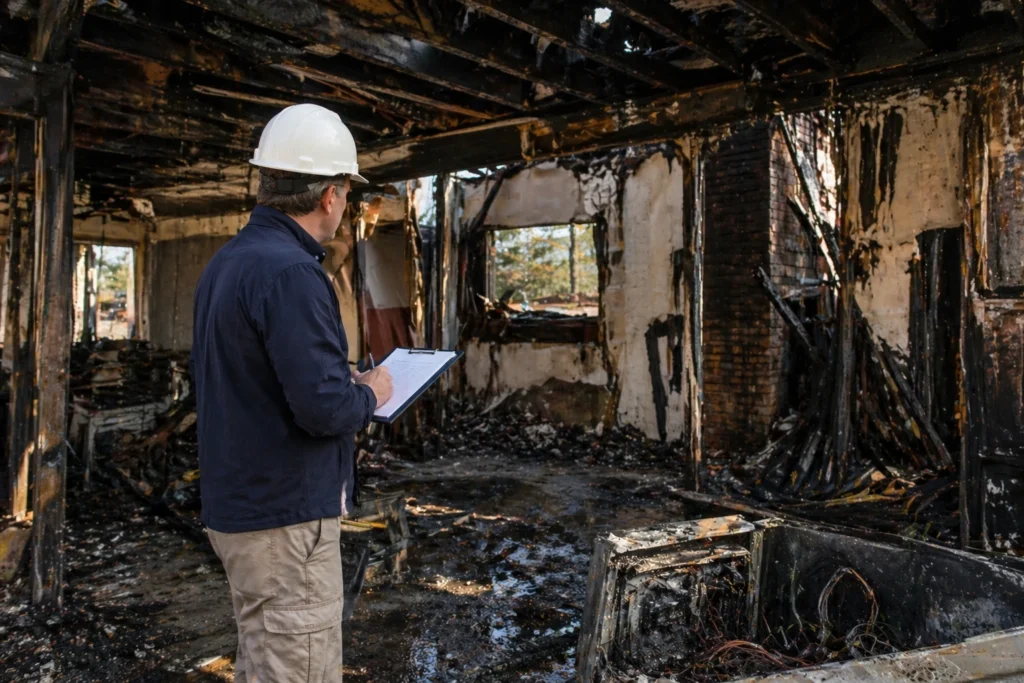
The first inspection sets the direction of the claim, so it helps to be prepared. The insurer’s adjuster will usually walk the property, take photos and measurements, ask how the fire started, and may ask for documents such as the fire department report, receipts, or a list of damaged contents. On larger or suspicious losses, the insurer may also send a cause-and-origin investigator, an engineer, or a contents specialist. Some insurers request a recorded statement or, under the policy’s conditions, an examination under oath.
A few practical tips:
- Be present, or have someone you trust there, and walk every affected room, including closets, the attic, and the garage.
- Point out smoke odor and residue in rooms the fire did not reach. Damage that is never mentioned is easy to leave out.
- Answer factually and do not guess. If you do not know something, say so and follow up in writing.
- Ask what happens next: when to expect the estimate, whether an advance on ALE or contents is available, and who your contact is.
- Request a copy of the estimate in line-item form so you can compare it with your own documentation.
Choosing a public adjuster for a fire claim
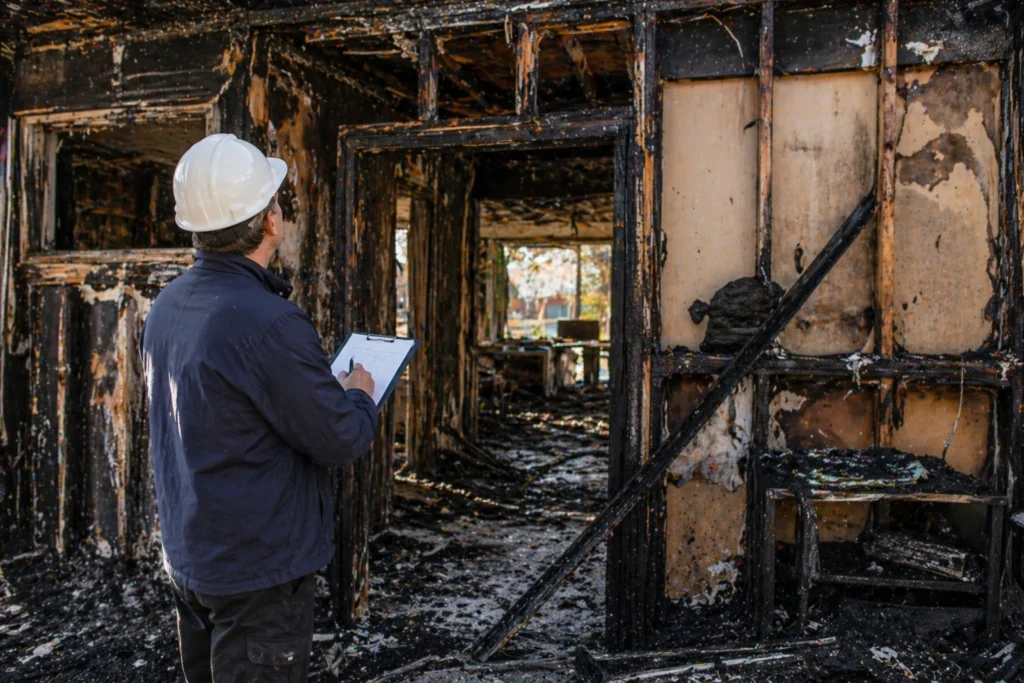
If you decide to hire help, check:
- License. Verify the public adjuster license with TDI. Our firm, Rise Public Adjusting LLC, holds TDI license #3356839.
- Fire experience. Ask how they handle contents inventories, smoke scope, and ALE.
- Fees in writing. The contract must state the fee. Texas caps it at 10% of the settlement, and you can rescind within 72 hours of signing.
- Availability. Ask whether they can inspect promptly and keep you informed.
- Honesty. Be cautious of anyone who promises a specific payout or pressures you to sign that day.
Local considerations for McAllen property owners
Fire claims in McAllen and Hidalgo County often involve slab-on-grade homes with stucco or brick veneer exteriors and composition shingle roofs. Smoke can spread through attics and duct systems into rooms the fire never reached. High humidity makes fast drying important after firefighting water. Repairs that require permits go through the City of McAllen Building Permits & Inspections department, and the 2024 ICC codes now apply to permitted work. Whether code upgrades are paid depends on your ordinance or law coverage.
For a deeper look at how a public adjuster handles a full fire loss, including structure, contents, and living expenses, read our companion guide on the fire insurance public adjuster in McAllen, TX, or visit our fire damage claims service page. If you are unsure whether you need help at all, knowing when to hire a public adjuster walks through the signs.
Frequently Asked Questions
What does a fire insurance adjuster do?
A fire insurance adjuster inspects the damage, reviews the policy, estimates the cost to repair the building and replace contents, and recommends or negotiates a settlement. Whether that adjuster works for the insurer or for you depends on the type of adjuster.
Is the adjuster my insurance company sends working for me?
No. Staff adjusters and independent adjusters are hired and paid by the insurer. Many are professional and fair, but their client is the insurance company. A licensed public adjuster is the only adjuster who represents the policyholder.
How much does a public adjuster charge for a fire claim in Texas?
Fees are set in a written contract before any work begins. Texas law caps public adjuster compensation at 10% of the insurance settlement, and you can rescind the contract within 72 hours of signing. If the insurer pays or commits in writing to pay policy limits within 72 hours after the loss is reported, the adjuster cannot take a percentage fee.
Can I talk to my insurer after I hire a public adjuster?
Yes. You remain the policyholder and stay involved. The public adjuster usually handles most of the day-to-day communication, estimates, and documentation, and keeps you informed.
Should I throw away burned or smoke-damaged belongings?
Not until they are documented and, ideally, until the insurer has had a chance to see them or agrees they can be discarded. Photograph items, record details for your inventory, and keep samples of damaged materials when practical. Throw away perishable food or anything unsafe, but document it first.
What if my fire claim is underpaid or denied?
Ask for the decision and its reasons in writing, compare the estimate with your own documentation, and request a re-inspection or submit a supplement. For disputes over the amount of loss, the policy’s appraisal clause may apply. For questions about suing or bad faith, consult a Texas attorney.
Sources and further reading
This article is general information about property insurance claims in Texas, not legal advice, and not a promise of any coverage or outcome. Your policy language and the facts of your loss control your claim.