
Key takeaways
- A hail damage claim supplement asks the carrier to add missed, under-measured, or newly discovered items to its estimate. It is a routine part of many roof claims.
- Commonly missed items include tear-off of additional layers, starter course, drip edge, ridge cap, pipe jacks, vents, step flashing, steep or high-roof charges, and decking found during tear-off.
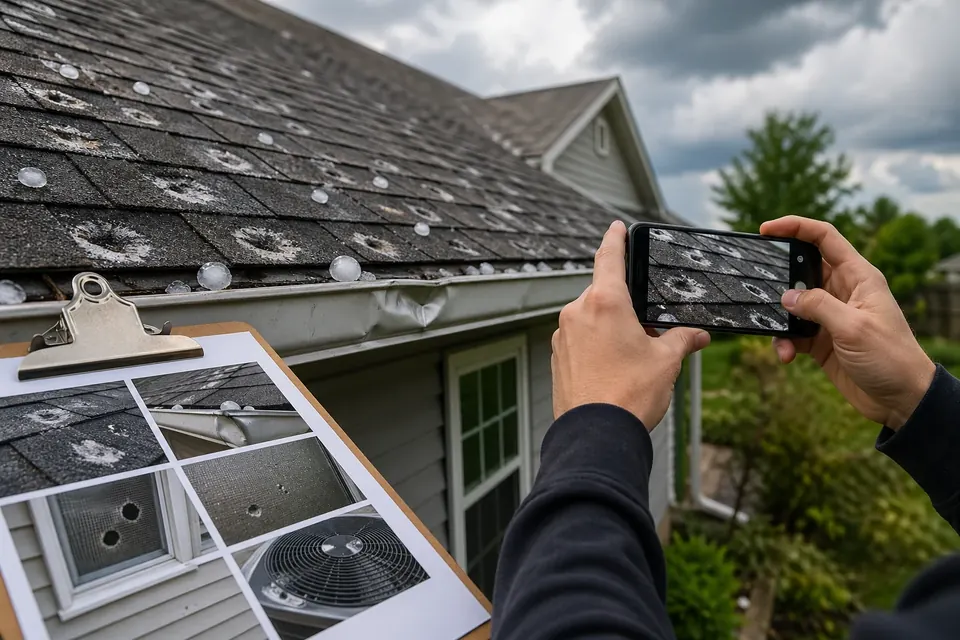
- Every supplement item needs proof: photos, measurements, manufacturer or code requirements, and a clear explanation.
- In McAllen, the 2024 ICC codes (effective January 1, 2026) and permit requirements may affect what a compliant re-roof includes. Payment for upgrades depends on your policy.
- No one can guarantee a supplement will be approved, but complete documentation gives the carrier what it needs to review it fairly.
The first estimate on a hail claim is often a starting point, not a final number. Adjusters work quickly after a storm, sometimes from limited roof access, and their first scope may leave out components a roofer must replace to do the job correctly. That is where hail damage claim supplements come in: a documented request to correct what the carrier’s scope missed.
This guide explains what a supplement is, the line items that are most often left out of hail estimates in McAllen and the Rio Grande Valley (RGV), how to support each one, and what to expect from the carrier’s review.

What is a hail damage claim supplement?
A supplement is a request to revise the insurer’s estimate. It may add items that were missed, correct measurements, fix pricing, or include damage that only became visible once work began. It is not a new claim. It stays under the same claim number and date of loss.
Supplements generally fall into three groups:
- Omissions — items needed for the repair that never appeared on the estimate (for example, drip edge or starter course).
- Quantity or pricing corrections — wrong roof square footage, missing waste factor, wrong pitch, or pricing that does not reflect the work.
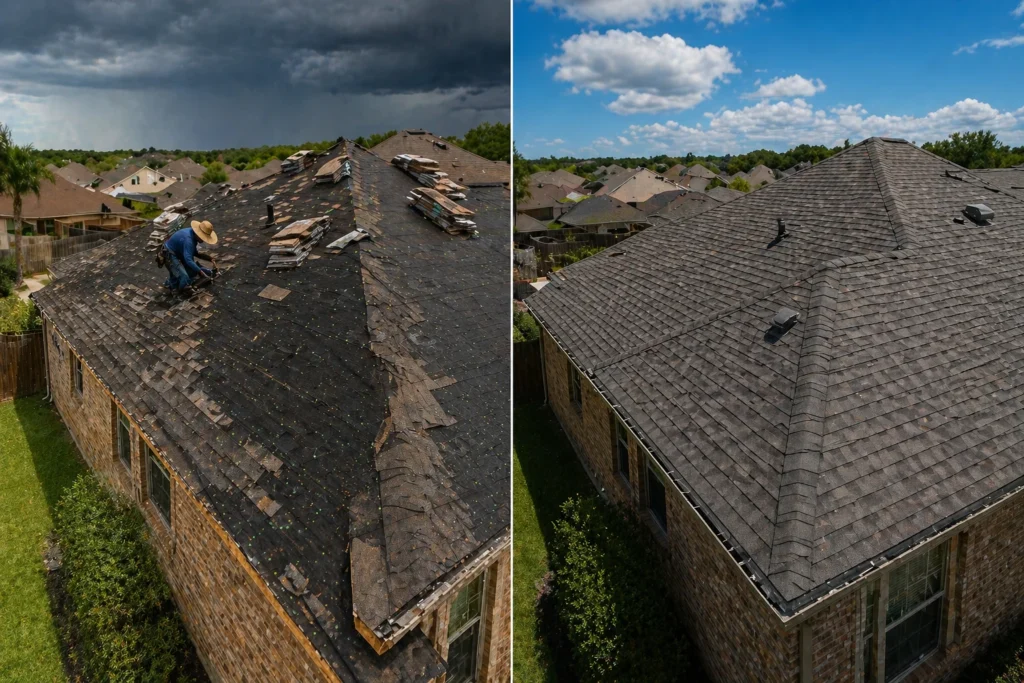
- Hidden or discovered damage — conditions found during tear-off, such as damaged decking, or interior damage that appeared after the inspection.
For example, an estimate might approve replacement of the two west-facing slopes but leave out the drip edge along those eaves, list the roof as a lower pitch than it really is, and say nothing about the bathroom exhaust vent with a cracked cap. None of those items changes the cause of loss. They change what it actually costs to complete the approved repair, which is exactly what a supplement addresses.
Why first estimates come up short
It is usually not about bad intent. After a big storm, the volume of claims is the bigger issue. NOAA’s Storm Events Database records 163 hail reports in Hidalgo County from 1956 through 2025, with most in April and May. A single event, such as the April 21, 2023 hailstorm that brought golf ball to baseball size hail near Peñitas and Mission, or the May 8, 2025 storm with hail up to 3 inches reported in north McAllen, can generate a wave of claims at once.
Common reasons first scopes fall short:
- Limited access. Steep or two-story slopes may be inspected from the ground, by drone, or only partially.
- Measurement shortcuts. Square footage, pitch, ridge and valley lengths, or waste factors may be estimated rather than measured.
- Component gaps. A roof is a system. The covering, starter, drip edge, underlayment, flashing, vents, and ridge cap all interact, and missing one can affect others.
- Repair vs. replace decisions made without considering whether matching or repairable shingles are realistically available.
- Code and permit items not addressed in the first pass.
Commonly missed line items in hail estimates
The table below lists items that frequently need attention on composition shingle roofs, the most common roof type on McAllen homes. Not every item applies to every roof, and each one still needs its own evidence.
| Item | Why it gets missed | How to support it |
|---|---|---|
| Tear-off of additional layers | Number of layers not checked | Photo of the roof edge or a cut showing layers |
| Starter course | Treated as included in shingles | Manufacturer installation instructions |
| Drip edge | Assumed reusable or not present | Photos at eaves and rakes; adopted residential code provisions |
| Ridge cap and hip shingles | Measured short or priced as cut shingles | Ridge and hip linear footage; product type |
| Step and counter flashing | Not visible without close inspection | Close-up photos at walls, chimneys, and dormers |
| Pipe jacks, roof vents, turbines | Soft-metal or plastic damage overlooked | Close-up photos with chalk circles and a measuring tape |
| Steep and high-roof charges | Pitch or story height not recorded | Pitch gauge photo; elevation photos |
| Waste factor | Applied too low for hips and valleys | Roof diagram or measurement report |
| Decking replacement | Only visible during tear-off | Photos before covering; contractor notes; notify carrier |
| Permit and code items | Not considered in the first pass | City permit scope; ordinance or law coverage in policy |
A note on underlayment: northern-climate “ice barrier” requirements generally do not apply in the RGV. What matters here is the underlayment and fastening the adopted code and the shingle manufacturer require for your roof slope. Rely on those documents rather than on generic checklists.
Metal, low-slope, and outbuilding roofs
Many RGV properties also have metal roofs on carports, barns, shops, and commercial buildings, and flat or low-slope roofs on businesses. These roofs have their own commonly missed items: trim and closures on metal panels, fastener replacement, curb and HVAC flashing on low-slope roofs, and roof drains or edge metal. Metal roofs also raise policy questions, because some policies exclude purely cosmetic dents. Check your policy wording and photograph any punctures, seam distortion, or coating damage that could affect water-tightness. For business properties, see our commercial property claims page.
The role of Xactimate

Most carriers write property estimates in Xactimate, which breaks repairs into line items for material, labor, and equipment using regional price lists. A supplement written in the same format lets the carrier see exactly which lines are being added or corrected, rather than comparing a lump-sum bid with a detailed estimate.
A useful supplement estimate:
- Uses the price list for the correct region and time period.
- Follows the actual order of work: tear-off, deck repair, underlayment, starter, field shingles, flashing, vents, ridge, cleanup.
- Uses measured quantities, with a roof diagram or measurement report attached.
- References the photo or document that supports each added line.
If you want an outside look at your carrier’s numbers, see our insurance estimate review service or the guide on reviewing an underpaid roof estimate.
The supplement process, step by step
- Get the full estimate. Ask the carrier for the complete line-item estimate, not just the payment summary, plus any roof measurement report or photos it relied on.
- Compare it with the roof. Walk through each line with your contractor or adjuster and mark what is missing, under-measured, or mispriced.
- Document each gap. Take labeled photos by slope, measure quantities, and collect manufacturer instructions or code references. Our claim documentation checklist can help.
- Write it up. Prepare a line-item estimate or a supplement letter listing each item, the quantity, and the supporting evidence.
- Submit in writing. Send it to the adjuster and keep a copy and the date sent. Ask for a reinspection if the carrier disputes items.
- Follow up. Track responses. Texas Insurance Code Chapter 542 sets general timelines for acknowledging claims, requesting information, and accepting or rejecting them after the insurer receives what it asked for.
- Handle discovered damage promptly. If decking or other damage appears during tear-off, photograph it before it is covered and notify the carrier right away.
Code upgrades and permits in McAllen
The City of McAllen adopted the 2024 International Code Council codes, including the International Residential Code, effective January 1, 2026. Re-roofing generally requires a building permit; confirm your project’s scope with the city’s Building Permits & Inspections department.
Code requirements and insurance coverage are different questions. A code requirement tells your contractor what the repair must include. Whether your insurer pays for that work depends on your policy, especially any ordinance or law coverage and its limit. Read more on our local building codes page.
Supplements and recoverable depreciation
Many replacement-cost policies pay actual cash value (replacement cost minus depreciation) first, then release the withheld depreciation after repairs are complete. Supplements and depreciation often move together at the end of a job: the contractor’s final invoice, photos of completed work, and any supplement items are submitted at the same time. Check your policy for the deadline to complete repairs and request depreciation. The claim calculator shows how deductibles and depreciation affect what you receive.
| Stage | What is typically paid | What to submit |
|---|---|---|
| Initial payment | ACV of the approved scope, minus deductible | Claim notice, inspection access, documents requested |
| Supplement | Additional approved items (ACV or RCV depending on timing and policy) | Line items, photos, measurements, explanations |
| Final / depreciation | Recoverable depreciation on completed work, if the policy provides it | Final invoice, completion photos, permit if applicable |
What weakens a supplement
- Blurry or unlabeled photos that don’t show which slope or component they belong to.
- Lump-sum bids with no quantities.
- Items requested without explanation of why they are needed.
- Covering hidden damage before the carrier is notified or can inspect.
- Waiting months to raise issues that were visible at the start.
If the supplement is denied
Ask for the reason in writing and for any reinspection notes. You can respond with additional evidence, request a reinspection, or, if the dispute is about the amount of loss, look at the appraisal clause in your policy (see insurance appraisal). If the whole claim was denied, our guide on what to do if your hail claim was denied in McAllen covers next steps. For legal questions, such as lawsuits or deadlines to sue, consult a Texas attorney.
When to get help
Contractors submit supplements every day, and many claims are resolved without outside help. A public adjuster can be useful when the gap between the carrier’s scope and the documented repair is large, when the carrier is unresponsive, or when the claim involves interior damage or multiple structures. Learn how our supplement service and hail damage claim help work, or compare the roles of a public adjuster and the insurance company’s adjuster.
Frequently Asked Questions
What is a hail damage claim supplement?
A supplement is a request to revise the insurer’s estimate to add items that were missed, under-measured, priced incorrectly, or discovered after the first inspection, such as hidden decking damage found during tear-off. Each item should be supported with photos, measurements, and an explanation.
Is there a deadline to submit a supplement?
Policies vary. Many replacement-cost policies set a time limit to complete repairs and claim recoverable depreciation, and some policies have other notice requirements. Check your policy and ask the carrier in writing what deadlines apply to your claim.
Do I need an Xactimate estimate to request a supplement?
It is not legally required, but most carriers write estimates in Xactimate, so a line-by-line estimate in the same format makes it easier to compare item by item and shows exactly what is being added.
Can I submit a supplement after repairs have started?
Yes, and that is common when hidden damage such as rotted or broken decking appears during tear-off. Notify the carrier promptly, photograph the condition before it is covered, and give the insurer a chance to inspect if it asks.
Will my insurer automatically pay for code upgrades?
Not automatically. Whether code-required work is paid depends on your policy, including any ordinance or law coverage and its limit. Document the code requirement and the permit scope, and check your declarations page.
Is a supplement guaranteed to be approved?
No. Approval depends on the policy, the evidence, and the carrier’s review. Clear documentation improves the chance of a fair review but cannot guarantee a result.
Sources and further reading
This article is general information about property insurance claims in Texas, not legal advice, and not a promise of any coverage or outcome. Your policy language and the facts of your loss control your claim.