
Key takeaways
- Start with the denial letter: identify the exact reason and the policy language cited. Every next step depends on it.
- Check NOAA storm records for your date of loss. Major events like April 21, 2023 and May 8, 2025 are documented for McAllen and nearby areas.
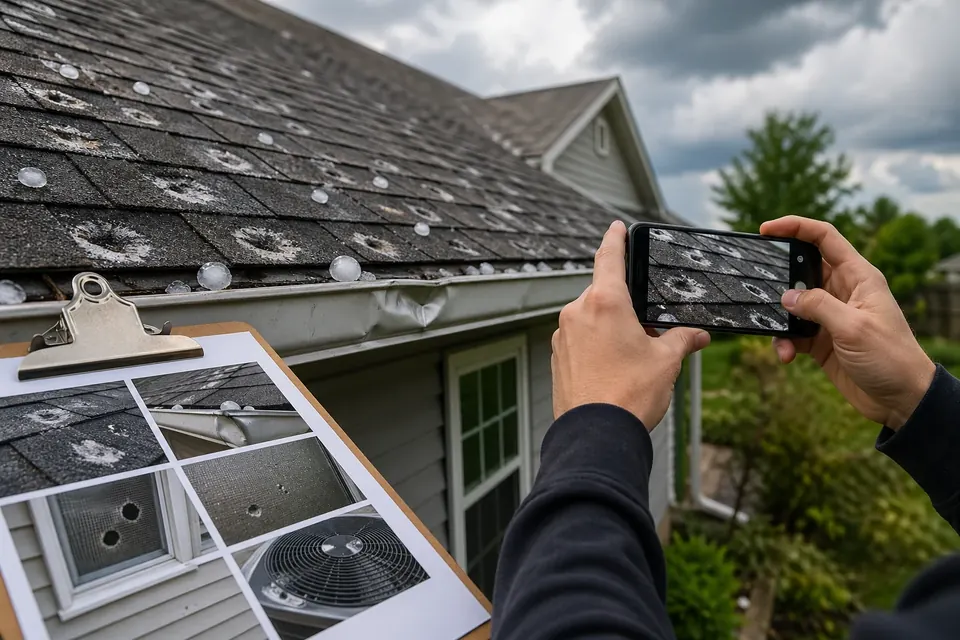
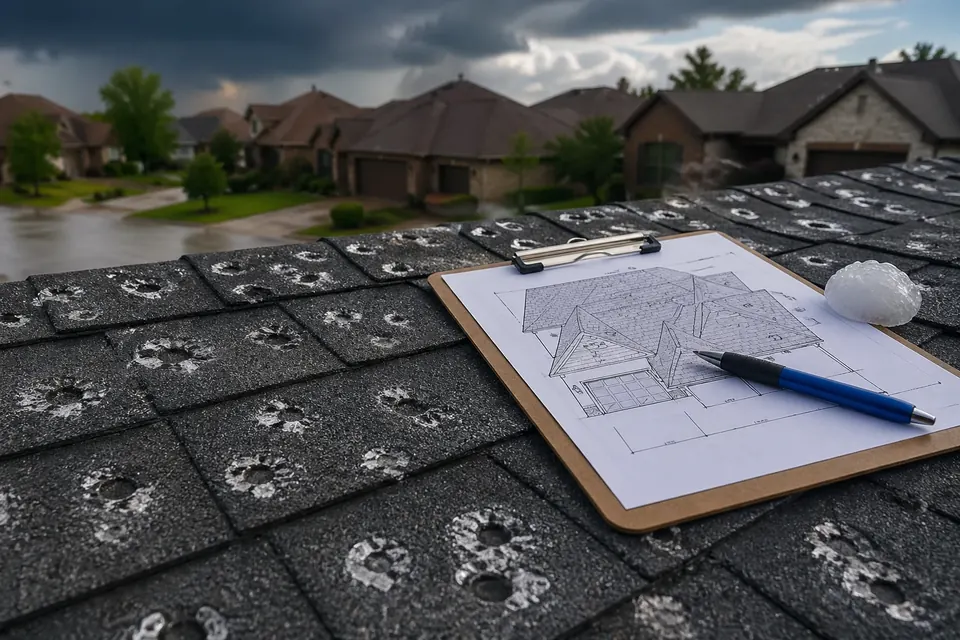
- Get a thorough independent inspection and document damage slope by slope, including soft metals and interior leaks.
- Ask for reconsideration or reinspection in writing. Appraisal resolves amount disputes, not coverage disputes.
- Policy deadlines matter. For questions about lawsuits or deadlines to sue, consult a Texas attorney.
Opening a letter that says your hail claim has been denied is frustrating, especially when you can see the damage. If you are trying to figure out what to do if your hail claim was denied in McAllen, the most important thing to know is that a denial is a decision based on the information the carrier had at that moment. Sometimes that decision is correct under the policy. Sometimes it rests on an incomplete inspection or a misunderstanding of the facts, and new evidence can change the picture.
This guide walks through a practical, step-by-step response for homeowners and business owners in McAllen, Hidalgo County, and the Rio Grande Valley (RGV). It is general information, not legal advice.
Why hail claims get denied
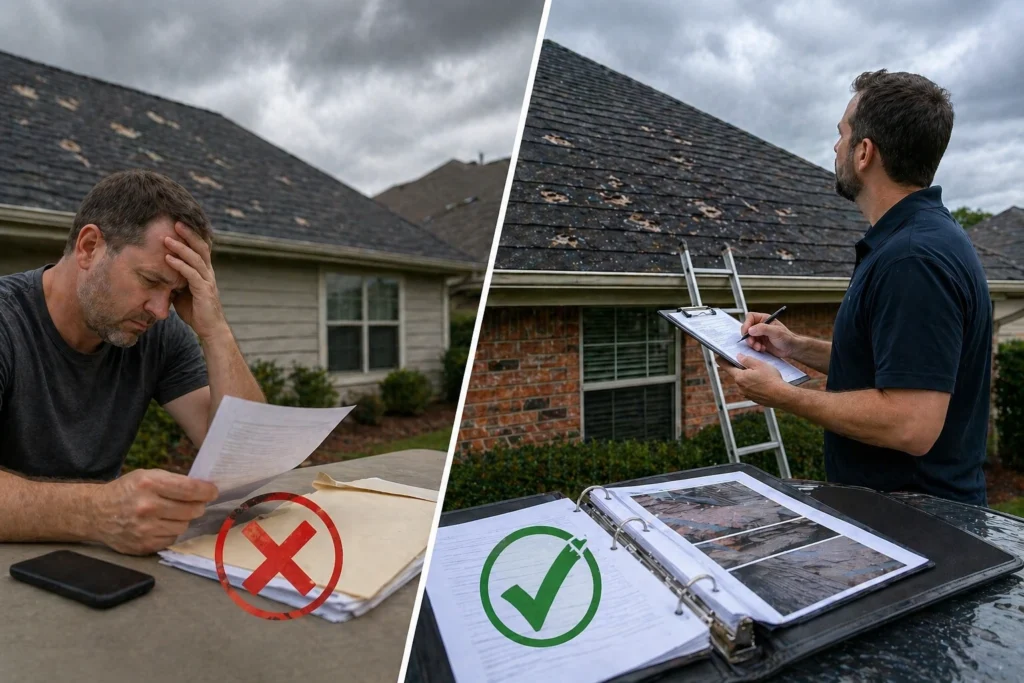
Denials tend to follow a few patterns. Knowing which one you’re facing tells you what evidence will matter most.
| Denial reason | What the carrier is saying | Evidence that addresses it |
|---|---|---|
| No hail damage found | The inspection did not identify storm damage | Independent inspection, close-up photos with scale, soft-metal impacts, NOAA storm reports |
| Wear and tear / age | Condition is from aging, not a storm | Impact patterns, fresh fractures, roof age and maintenance records, date-of-loss storm data |
| Cosmetic damage | Policy excludes appearance-only damage | Exact exclusion wording; evidence of punctures, fractured mats, broken seals, or leaks |
| Pre-existing or prior storm | Damage happened before the policy or reported storm | Prior inspection reports, photos, purchase records, date-of-loss weather data |
| Below deductible | Covered damage is less than the wind/hail deductible | A complete, measured scope that includes all damaged components |
| Late notice | Claim was reported too late under the policy | Timeline of when damage was discovered and reported; consult an attorney on policy conditions |
Step 1: Read the denial letter carefully
Look for three things: the stated reason, the specific policy provisions quoted, and what the adjuster says was observed. Then request, in writing, a copy of your full policy (including endorsements), the adjuster’s estimate and photos, and any engineer or inspection report the carrier relied on. Keep a log of every call and email with dates and names.
Check your declarations page for your wind/hail deductible, which on many Texas policies is a percentage of your Coverage A (dwelling) limit. A “denial” is sometimes really a finding that the covered damage fell below that deductible.
If the letter is vague, write back and ask the carrier to explain the denial in plain terms: which areas of the property were inspected, which damage it considered and excluded, and which policy language it is relying on for each item. A clear written answer makes it much easier to decide whether to gather more evidence, correct the scope, or seek legal advice. It also creates a record of the claim’s handling if questions about timelines come up later.
Step 2: Verify the storm with NOAA records
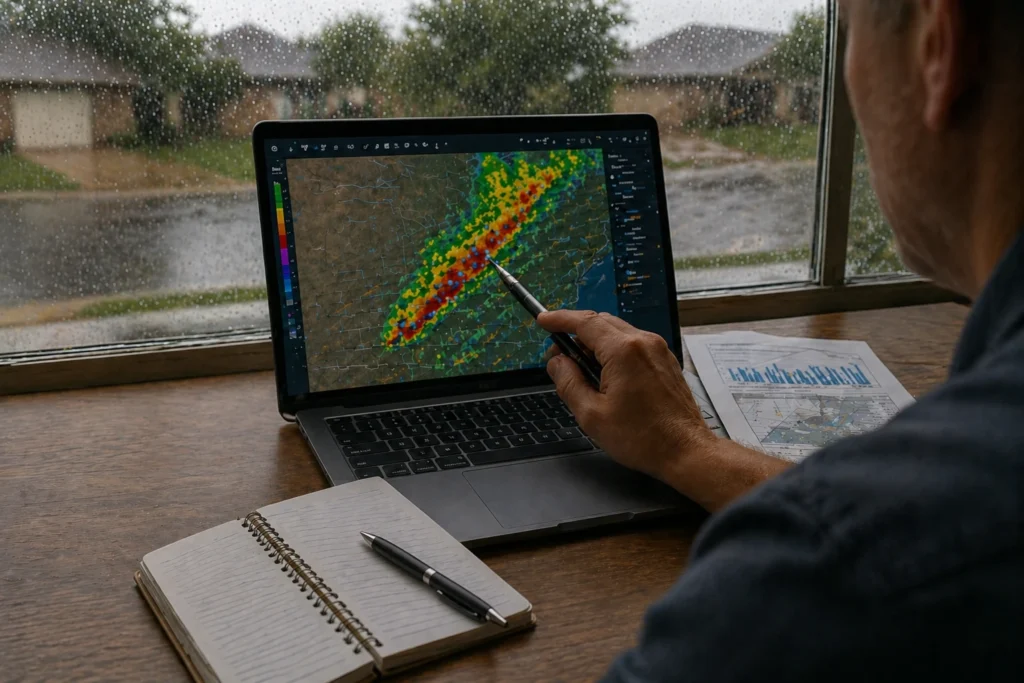
If the carrier questions whether a damaging storm occurred, official weather records help. The NOAA National Centers for Environmental Information (NCEI) Storm Events Database lists hail reports by date, location, and size. In Hidalgo County, most hail falls in April and May. Recent examples include:
| Date | NOAA-recorded hail | Link |
|---|---|---|
| April 21, 2023 | Up to an hour of continuous hail across southern Hidalgo County; up to 2.75 in near Peñitas and McCook, 2.5 in in Mission, 1.25 in in McAllen | Mission report |
| May 8, 2025 | Hail up to 3 in reported in north McAllen (Shayland); strong microburst near the Edinburg city line | Shayland report |
| May 13, 2024 | Baseball-size hail reported southeast of McCook | McCook report |
Hail can be very localized, so one neighborhood may be hit hard while another nearby sees little. Use our storm lookup to find reports near your address, and see McAllen storm history for more background. Storm data supports your timeline but does not, by itself, prove damage to your roof.
Step 3: Get an independent inspection
A careful inspection examines every slope and accessory, not just the most visible area. On a typical McAllen home with a composition shingle roof, that includes:
- Shingle impacts with fractured mats or displaced granules, marked and photographed with a scale reference.
- Soft metals: roof vents, turbines, flashing, gutters, downspouts, and AC condenser fins.
- Pipe jacks, ridge vents, and other accessories.
- Stucco, trim, window screens, and metal roofs on outbuildings.
- Attic and ceilings for active leaks or new staining.
Different roofing materials respond differently. Metal panels may dent without leaking (raising “cosmetic” questions), while tile can crack in ways not visible from the ground. The inspection should match the roof you actually have.
Step 4: Document everything
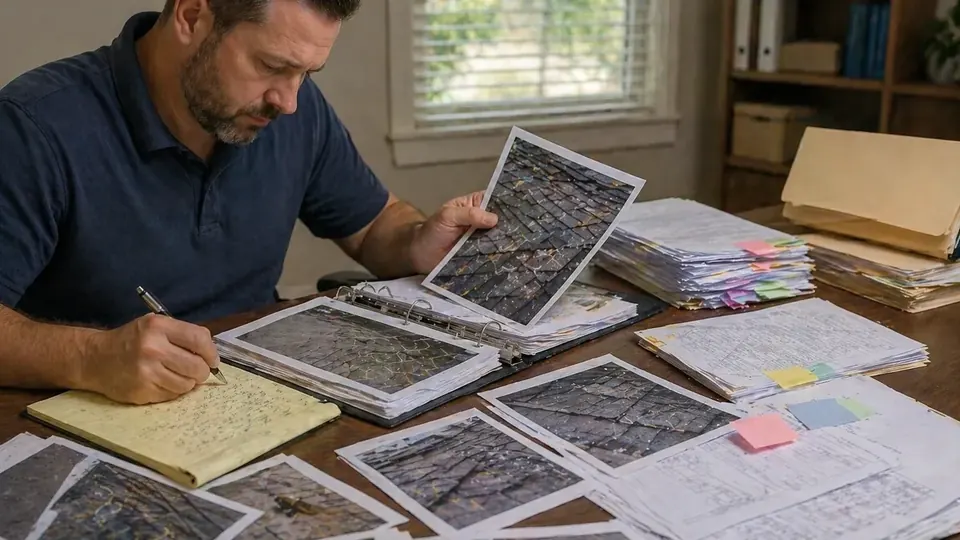
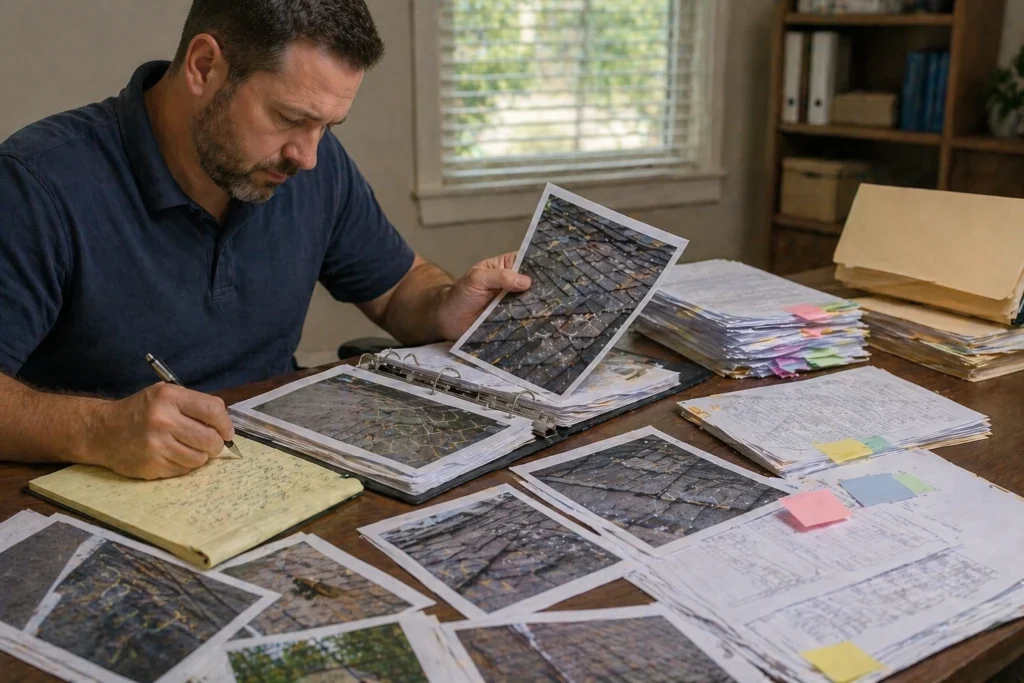
Good documentation is what turns a disagreement into a reviewable claim. Organize photos by slope and elevation, label them, and pair them with notes on date, location, and what each photo shows. Our full guide on how to document hail damage and the claim documentation checklist cover this step in detail.
Step 5: Request reconsideration or a reinspection
Send the carrier a written request to reconsider, with your new evidence attached. If the first inspection was brief or missed areas, ask for a reinspection and request that your contractor or adjuster be present. Walk the adjuster through the specific items you documented.
Texas Insurance Code Chapter 542 sets general timelines for insurers: they generally must acknowledge a claim, begin the investigation, and request needed information within 15 days of notice, and then accept or reject within 15 business days after receiving everything requested (with up to 45 more days if they notify you they need more time). These deadlines may be extended by 15 days after a declared weather catastrophe. If timelines are slipping, see our delayed claim page.
Step 6: Look for scope gaps
Some claims are denied because the visible damage looked small and the total fell under the deductible. A complete scope that includes drip edge, starter, ridge cap, vents, flashing, steep or high-roof charges, and accurate measurements can change that math. Learn more in hail damage claim supplements: what carriers miss.
Step 7: Know your escalation options
| Option | What it does | Best for |
|---|---|---|
| Reconsideration / reinspection | Carrier reviews new evidence | Missed damage, rushed inspection |
| Appraisal | Each side picks an appraiser; they select an umpire; an award agreed by two is binding on the amount | Disputes over the amount of loss, not coverage |
| TDI complaint | TDI may ask the insurer to respond | Handling problems, missed deadlines, no explanation |
| Attorney consultation | Legal advice on coverage, bad faith, and deadlines | Coverage denials, approaching suit deadlines |
You can file a complaint with the Texas Department of Insurance. For appraisal, see our insurance appraisal page. Weather-related lawsuits in Texas involve pre-suit notice requirements under Chapter 542A, and many policies set a contractual deadline to sue. A public adjuster cannot give legal advice, so consult a Texas attorney about those questions.
Step 8: Consider professional help
You can handle a reconsideration yourself, but a public adjuster can help when the claim is large, the denial reason is technical, or you don’t have time to manage the process. A licensed Texas public adjuster can review the policy, inspect and document the damage, prepare an independent estimate, and communicate with the carrier for you. Fees are disclosed in a written contract before any work begins; Texas law caps public adjuster compensation at 10% of the insurance settlement.
See our denied insurance claims service, our hail damage claims page, or compare roles in public adjuster vs. insurance adjuster.
How roof type affects a denial
The material on your roof shapes both the damage and the carrier’s arguments. McAllen homes are mostly composition shingle roofs, but metal roofs on outbuildings, carports, and commercial buildings are common, and some homes have tile.
| Roof type | Common denial argument | What to look for |
|---|---|---|
| Composition shingles | Granule loss is normal aging | Random impact pattern, fractured mat under the impact, matching dents on vents and gutters |
| Metal panels | Dents are cosmetic only | Exact policy exclusion wording; punctures, seam or fastener damage, coating breaks |
| Tile | No visible damage from the ground | Close inspection for cracks and chips; broken pieces under the tile line |
| Flat / low-slope (commercial) | Membrane not compromised | Core samples or close inspection at impacts; flashing, curbs, and rooftop units |
Protect the property while you dispute
Most policies require you to take reasonable steps to prevent further damage, even while a claim is disputed. If the roof is leaking, a tarp or other temporary repair is usually appropriate. Photograph the damage before and after, keep receipts, and tell the carrier what you did. Avoid permanent replacement until the damage is documented and the carrier has had a chance to inspect, unless safety requires it. If another storm hits before the dispute is resolved, report it separately and keep the dates and photos clearly separated, since overlapping storms in the same spring season are common in the RGV.
Common mistakes after a denial
- Assuming the denial is final without reading the reason.
- Making permanent repairs before documenting the damage. Temporary repairs to prevent further damage are usually expected; keep receipts and photos.
- Relying on a phone call. Put requests and responses in writing.
- Letting policy deadlines pass while waiting.
- Arguing without new evidence. Carriers respond to documents, not frustration.
Your action plan
- Read the denial letter and request your full policy, estimate, and photos.
- Check NOAA storm data for your date of loss.
- Get a thorough, independent inspection.
- Document damage slope by slope, including soft metals and interior.
- Request reconsideration or reinspection in writing.
- Correct scope gaps with a supplement.
- Use appraisal, a TDI complaint, or attorney advice as appropriate.
Frequently Asked Questions
Can a denied hail claim be reconsidered?
Often, yes. Insurers can reconsider a decision when you provide new or overlooked information, such as storm data for your date of loss, a detailed inspection report, or photos of damage the adjuster did not see. Submit it in writing and ask the carrier to review the claim again.
How long do I have to dispute a denied hail claim in Texas?
It depends on your policy. Many Texas property policies include a contractual deadline to file suit, often two years and one day from when the claim accrued. Weather-related claim lawsuits also require written pre-suit notice under Insurance Code Chapter 542A. Check your policy and talk to a Texas attorney about legal deadlines; don’t wait to start gathering evidence.
My insurer says the hail damage is cosmetic. What does that mean?
Some policies, especially for metal roofs, exclude damage that affects only appearance and not function. Whether that exclusion applies depends on the exact wording and on the evidence. Fractured shingle mats, punctures, or broken seals are different from surface dents, so ask what exclusion was applied and get a close inspection.
What if the denial says the damage is wear and tear?
Ask the carrier to identify what it observed and where. Then compare with storm data for your date of loss and close-up photos of impacts, especially on soft metals like vents and gutters, which help separate fresh hail damage from aging.
Can I use the appraisal clause on a denied claim?
Appraisal generally resolves disputes about the amount of loss, not whether the damage is covered. If the carrier denied the entire claim on a coverage ground, appraisal may not be the right tool. Read your policy and consider legal advice if coverage is the issue.
Should I file a complaint with the Texas Department of Insurance?
You can file a complaint with TDI if you believe an insurer handled your claim improperly, for example by missing deadlines or not explaining a denial. TDI may contact the insurer for a response. A complaint does not decide the amount of your claim.
Sources and further reading
This article is general information about property insurance claims in Texas, not legal advice, and not a promise of any coverage or outcome. Your policy language and the facts of your loss control your claim.