Key takeaways
- Hail season in McAllen and Hidalgo County peaks in April and May. A roof can be damaged even when it looks fine from the ground.
- Each roof type shows hail damage differently. Shingles bruise and shed granules, metal dents and loses coating, tile cracks, and flat roofs puncture or blister.
- Dated photos, a NOAA storm record, and a written inspection give your roof hail damage insurance claim the evidence it needs.
- Read the insurer’s estimate line by line. Flashing, ridge caps, vents, drip edge, and interior damage are often left out.
- Coverage depends on your policy, your wind/hail deductible, and whether your roof is covered at replacement cost or actual cash value.
Hail hits fast and unevenly, and your roof takes the impact whether you see it or not. A roof hail damage insurance claim in McAllen works best when it is handled carefully from the first day. Many disputed claims have nothing to do with whether damage exists. The trouble is that the damage was never properly identified, documented, or presented.
A common story goes like this. The roof looks fine from the driveway. A few weeks later a ceiling stain shows up. Months later the insurer says the damage is too old to be from the storm. This guide walks McAllen and Hidalgo County homeowners through the process, from the day of the storm to a settled claim, so you can avoid that outcome.
Why roof hail claims matter in McAllen and the Rio Grande Valley
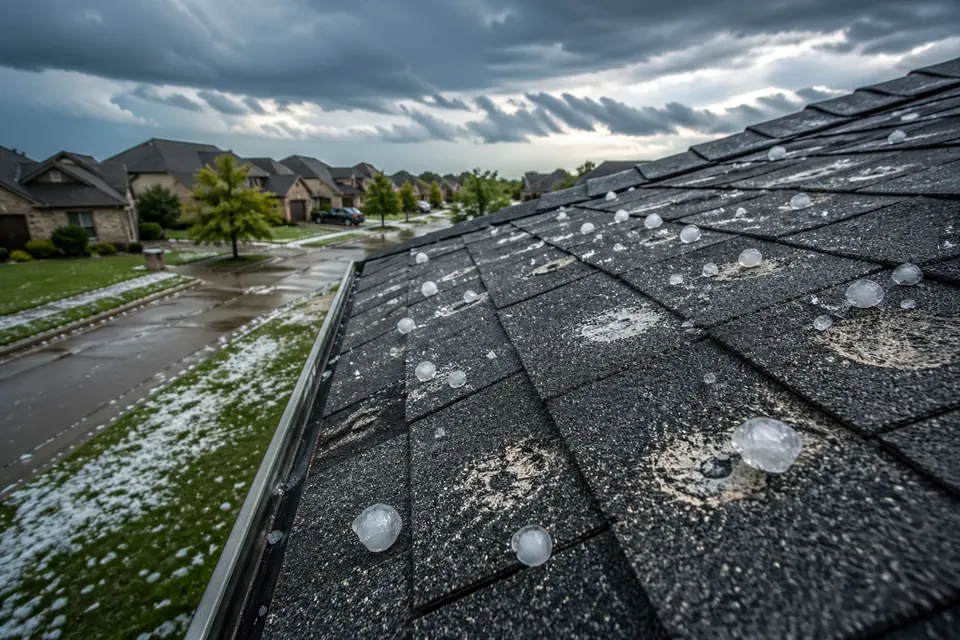
Hail is a regular part of life in the Rio Grande Valley (RGV). The NOAA National Centers for Environmental Information (NCEI) Storm Events Database lists 163 hail reports for Hidalgo County from 1956 through 2025. Of those, 104 came in April or May, and 62 were golf-ball size (1.75 inches) or larger. Recent examples include:
- April 20, 2012: softball-size (4.5-inch) hail was reported at McAllen High School, with golf-ball to baseball-size hail falling for more than 20 minutes across McAllen and Mission (NCEI event record).
- April 21, 2023: up to an hour of continuous hail across southern Hidalgo County, with baseball-size reports near Peñitas and McCook (NCEI event record).
- May 8, 2025: a supercell produced hail up to 3 inches in north McAllen (NCEI event record).
Most McAllen homes are slab-on-grade houses with composition shingle roofs, and many properties also have metal roofs on outbuildings or low-slope roofs on additions and commercial buildings. Our McAllen storm history page can help you find the event that affected your address.
How hail damages different roof types
Hail damage does not look the same on every roof. If you know what to look for, you are less likely to leave damage out of your claim.
| Roof type | Common hail damage signs | Typical insurer pushback |
|---|---|---|
| Composition (asphalt) shingle | Granule loss exposing the mat, soft “bruises,” fractured mats, cracked tabs, dark circular marks | “Wear and tear,” “blistering,” “manufacturing defect” |
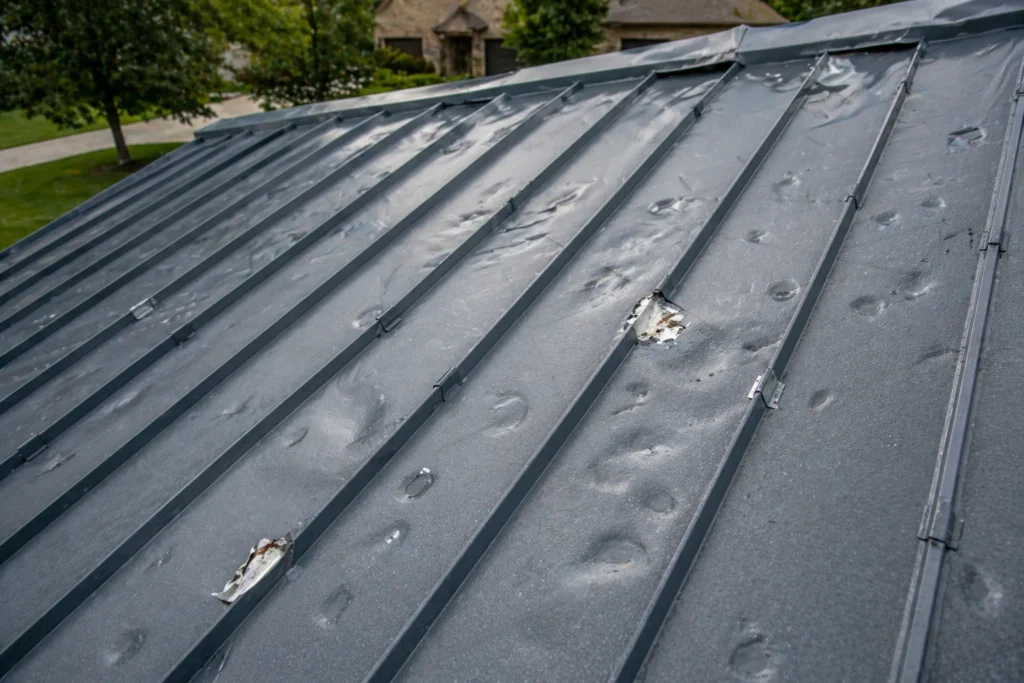
| Metal (homes, barns, shops) | Dented panels and trim, chipped or cracked coating, seam distortion | “Cosmetic only” (check for a cosmetic damage exclusion) |
| Clay or concrete tile | Cracked, chipped, or broken tiles, slipped pieces, exposed underlayment | “Pre-existing cracks,” matching and availability disputes |
| Flat / low-slope (modified bitumen, TPO, built-up) | Membrane punctures, fractured surfacing, blistering, damaged drains and curbs | “Ponding” or age-related deterioration |
Composition shingles
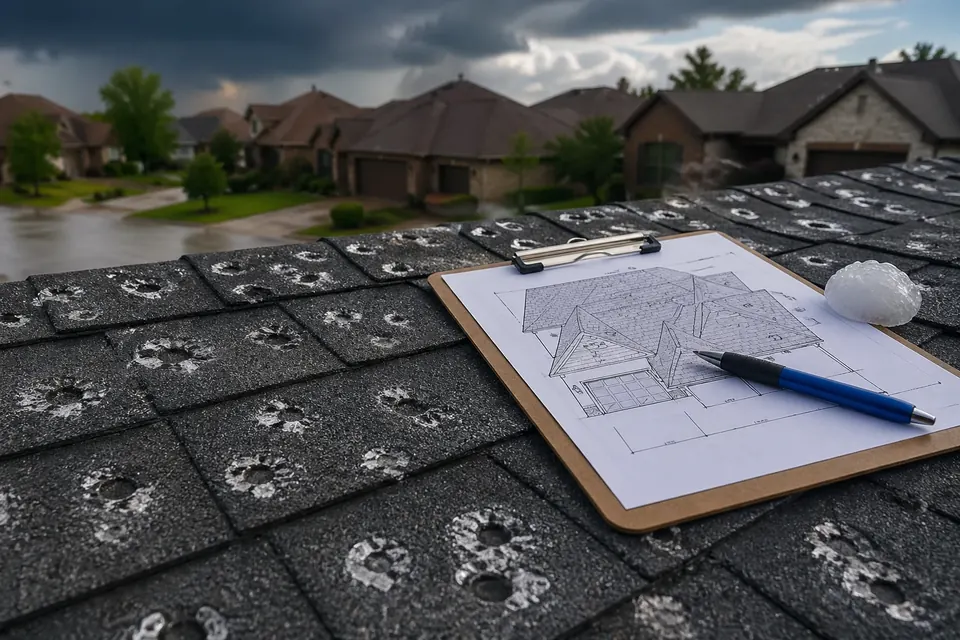
Shingle roofs take most of the hail and see most of the disputes. Granules protect the asphalt from UV breakdown, and once hail knocks them loose the shingle ages faster. Real hail damage tends to be random. You may find circular marks with exposed mat, or soft spots where the mat under the surface has fractured. Uniform granule wear across a whole slope usually points to age instead.
Metal roofs
Metal resists punctures but still dents, and hail can crack the factory coating, which may lead to corrosion. Some Texas policies include a cosmetic damage exclusion or endorsement for metal roofing. Read that language before you assume denting is or is not covered.
Tile roofs
Tile handles small hail well, but larger stones can crack or break pieces outright. One cracked tile can let water reach the underlayment. Finding matching tile can also be difficult, which affects whether a repair is realistic.
Flat and low-slope roofs
Commercial buildings and many home additions in McAllen use low-slope roofs. Hail damage there is often hard to see until water gets in, so a close inspection soon after the storm matters. For business properties, see our commercial property claims page.
What to do in the first 72 hours after a hailstorm
- Stay safe. Stay off a wet or damaged roof. Hidden decking damage and slick surfaces cause injuries.
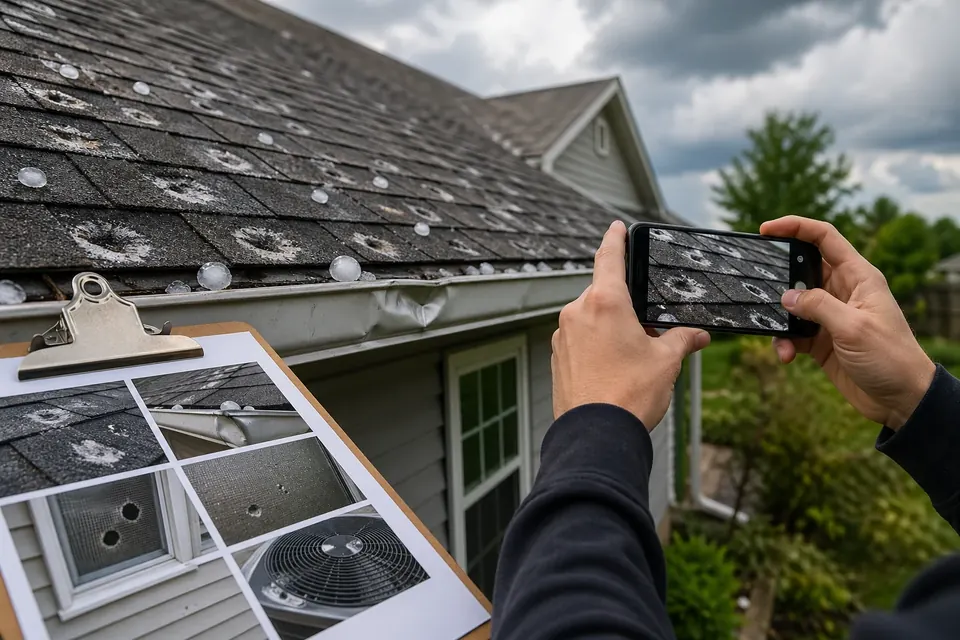
- Walk the property at ground level. Look for dented gutters, downspouts, A/C fins, mailboxes, window screens, and siding. Damage to these soft metals is strong supporting evidence that the roof was hit too.
- Photograph and date everything. Take wide shots of each side of the house, then close-ups. If it is safe, photograph hailstones next to a coin or ruler.
- Prevent further damage. Reasonable temporary repairs, such as tarping or catching leaks, are usually your responsibility under the policy. Keep receipts.
- Report the claim and get a professional inspection. Write down your claim number and the name of everyone you speak with.
After big RGV hailstorms, out-of-area contractors often go door to door. Before you sign anything, check who the company is, read every page of the contract, and never sign over your insurance benefits without understanding what that means.
How to document roof hail damage for your insurance claim

Good documentation is what holds a claim together. For a full walkthrough, read how to document hail damage for an insurance claim and use our claim documentation checklist.
| Evidence | What it shows | Tips |
|---|---|---|
| Roof overview photos | Extent and location of damage on each slope | Shoot every slope and label each by direction (north, south, etc.) |
| Close-up impact photos | Bruising, granule loss, cracks, dents | Include a coin or ruler for scale and circle the hits with chalk |
| Soft-metal and exterior damage | That hail of a damaging size fell at your property | Gutters, vents, A/C units, screens, fences, vehicles |
| Interior damage | Leaks and resulting damage | Ceiling stains, attic decking, wet insulation |
| Weather records | Date, location, and hail size | NOAA Storm Events and National Weather Service reports |
| Written inspection / estimate | Scope and cost of repair | Line-item format (Xactimate is common) is easiest to compare |
Filing your roof hail damage claim the right way
Start with your policy
Before the adjuster comes out, look at your declarations page and policy. Check:
- Your wind/hail deductible. Many Texas policies use a separate wind/hail deductible, often a percentage of your Coverage A (dwelling) limit. A 2% deductible on a $250,000 dwelling limit is $5,000.
- Roof settlement terms. Replacement cost policies usually pay actual cash value first, then release recoverable depreciation after repairs are done. Some Texas roofs are covered only at actual cash value or under a roof payment schedule. Our guide to replacement cost vs. actual cash value explains the difference.
- Exclusions and endorsements, such as cosmetic damage exclusions for metal roofs.
- Ordinance or law coverage, which may help pay for code-required items during repair.
Submit a complete claim
Give the insurer the date of loss, a clear description of the damage (roof, exterior, and interior), and your supporting photos. Be specific. “Hail damage to all slopes, gutters, and A/C unit; leak in the back bedroom ceiling” works better than “roof damage.”
Know the insurer’s timeline
Texas Insurance Code Chapter 542 sets claim-handling deadlines. Insurers generally have 15 days after notice to acknowledge the claim, start the investigation, and request information. They then have 15 business days after receiving everything they asked for to accept or reject the claim, and they can extend that by up to 45 days if they notify you. If the insurer accepts the claim, payment is generally due within 5 business days. After a declared weather-related catastrophe, these deadlines can be extended by 15 days. If your claim stalls, see our page on delayed insurance claims.
What roof hail estimates commonly miss
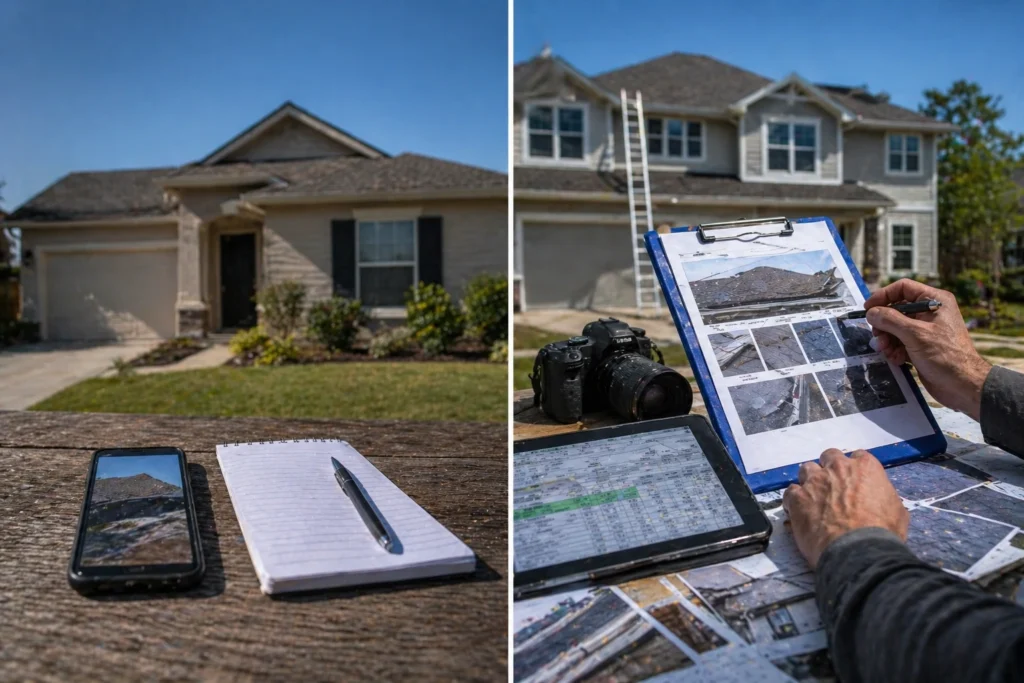
A first estimate may be accurate, or it may leave things out. The items below are often missing or underpriced. Compare your estimate against this list:
| Item | Why it matters |
|---|---|
| Tear-off and disposal of existing layers | Extra layers increase labor and dumpster costs |
| Underlayment and drip edge | Required with a new roof covering and addressed in the adopted building code |
| Starter strip, hip and ridge cap | Priced separately from field shingles |
| Step, counter, and pipe flashing | Often cannot be reused once the shingles are removed |
| Roof vents, turbines, and ridge vent | Soft metals and plastics are easily damaged by hail |
| Steep-slope and high-roof charges | Labor and safety factors on steep or two-story roofs |
| Gutters, downspouts, screens, A/C fins | Exterior hail damage outside the roof itself |
| Interior repairs | Drywall, paint, and insulation affected by leaks |
| Permit and code-related items | May be covered under ordinance or law coverage, depending on the policy |
When items are missing, the usual fix is a supplement: a documented request to add scope or correct pricing. Our article on hail damage claim supplements covers how carriers handle them, and our insurance estimate review service can compare your estimate line by line with the damage you documented.
McAllen building codes and permits
The City of McAllen adopted the 2024 International Code Council codes, including the 2024 International Residential Code, effective January 1, 2026. Re-roofing generally requires a building permit, so confirm the scope with the City’s Building Permits & Inspections department before work starts. Having to meet code does not automatically mean the insurer must pay for every upgrade. That depends on your ordinance or law coverage and your policy terms. Our local building codes page has more detail.
A realistic claim timeline
No two claims move at the same pace, especially after a storm that damages thousands of roofs at once. The timeline below is a general guide, not a promise.
| Stage | Typical timing | What you should be doing |
|---|---|---|
| Storm and immediate response | Days 1–3 | Photograph damage, make temporary repairs, report the claim |
| Acknowledgment and inspection | Within about 15 days of notice (longer after a declared catastrophe) | Be present at the inspection and point out every damaged area |
| Estimate and decision | Weeks 2–8 | Review the estimate line by line and request missing items in writing |
| Supplements and negotiation | Varies | Submit supporting photos, measurements, and pricing |
| Repairs and recoverable depreciation | After repairs, within the policy’s deadline | Send the final invoice and completion photos to recover held-back depreciation |
When a public adjuster can help
The insurance company’s adjuster works for the insurer. A public adjuster is licensed by the Texas Department of Insurance and represents only you, the policyholder. Read public adjuster vs. insurance adjuster for hail claims for a side-by-side comparison.
Outside help is most often worth considering when:
- The estimate is far below your contractor’s bid or leaves out whole slopes or components.
- The insurer calls the damage wear and tear, cosmetic, or pre-existing.
- The claim includes interior water damage, several structures, or a commercial roof.
- Your claim was denied. See what to do if your hail claim was denied in McAllen.
Our roof damage insurance claims and hail damage claims services cover inspection, documentation, estimating, and communication with your insurer. Fees are disclosed in a written contract before any work begins, and Texas law caps public adjuster compensation at 10% of the insurance settlement. A public adjuster cannot guarantee a particular result. What we can do is make sure your claim is complete and well supported.
Frequently Asked Questions
How long do I have to file a roof hail damage claim in McAllen?
It depends on your policy. Most policies require “prompt” notice of a loss, and some Texas policies set a specific window for reporting wind and hail damage. Check the conditions section of your policy and report as soon as you reasonably can. Separate contractual deadlines to file a lawsuit also exist; for questions about those, consult a Texas attorney.
Will my insurer pay for a full roof replacement after hail?
Only if the covered damage and your policy support it. Insurers often decide between repair and replacement based on how many shingles are damaged per slope, whether repairs are feasible, and whether matching materials are available. Your coverage type (replacement cost, actual cash value, or a roof payment schedule) and deductible also affect what you receive.
What if the adjuster says my roof damage is just wear and tear?
Ask for the reasoning in writing, then compare it with your own evidence: dated photos, the NOAA storm record for your area, granule loss patterns, and soft-metal dents. Hail impacts tend to be random and scattered, while aging tends to be uniform. A second inspection, an estimate review, or appraisal (for disputes over the amount) may be options.
Do I need a permit to replace a hail-damaged roof in McAllen?
Re-roofing generally requires a building permit in McAllen. Confirm the scope with the City of McAllen Building Permits & Inspections department at (956) 681-1300 before work begins, and make sure your contractor pulls the permit.
Is McAllen in the TWIA windstorm area?
No. Hidalgo County is not in the Texas Windstorm Insurance Association catastrophe area, so most McAllen homes get wind and hail coverage from their regular homeowners insurer (or the Texas FAIR Plan where applicable). Check your declarations page for a separate wind/hail deductible.
Can I add damage that the adjuster missed after I get the estimate?
Often, yes. Insurers commonly handle missed or newly discovered damage through a supplement or a request for re-inspection, supported by photos, measurements, and line-item pricing. Policy terms and timing still matter, so submit supplements promptly.
Sources and further reading
This article is general information about property insurance claims in Texas, not legal advice, and not a promise of any coverage or outcome. Your policy language and the facts of your loss control your claim.